
PP405: The Molecule That Could Wake Up Dormant Hair Follicles
FEATURE – What if a simple daily gel application could wake dormant follicles and regrow hair where there was none? That's the promise of PP405, an experimental molecule currently in clinical trials generating enormous excitement in the hair loss field.

Table of Contents
1. What is PP405?
2. How does PP405 work?
3. What the clinical studies show
4. What's next?
5. PP405 vs Minoxidil / Finasteride
6. Key takeaways
7. An alternative available today
1. What is PP405?
PP405 is an experimental molecule developed to reactivate dormant hair follicles — a target that existing treatments have largely left unexplored. Unlike conventional approaches, it doesn't aim to block the hormones responsible for hair loss or improve blood circulation. Instead, it seeks to restart the metabolic activity of follicle stem cells. If this strategy proves effective at scale, it could mark a genuine turning point in how alopecia is managed.
2. How does PP405 work?
A cellular "energy booster"
Each hair follicle functions like a small power plant. Over time — through oxidative stress, hormonal factors, or genetics — this "factory" gradually shuts down. PP405 reactivates the mitochondrial metabolism of follicle stem cells, stimulating ATP production — cellular energy — and forcing the follicle out of its dormant phase.
A different mechanism from minoxidil and finasteride
Where finasteride blocks DHT and minoxidil acts on microcirculation, PP405 directly targets metabolic reprogramming of cells. In plain terms: it doesn't just maintain existing hair — it wakes up inactive follicles.
3. What the clinical studies show
Phase 2A: first results in men
In June 2025, a Phase 2A double-blind, placebo-controlled trial was conducted in 78 men with androgenetic alopecia (Norwood stages 3–5), lasting 12 weeks with 4 weeks of active treatment. Result: 31% of participants treated with PP405 observed a hair density increase of more than 20% by week 8. No significant change in the placebo group.
Tolerability and absence of side effects
No serious adverse events were reported and no systemic absorption was detected. PP405 remains localised on the scalp — a major advantage over hormonal treatments.
4. What's next?
PP405 will enter Phase 2B with an extended follow-up and larger sample, before the Phase 3 planned for 2026. If all goes to plan, a market launch could occur around 2029. Before any large-scale rollout, it will need to be demonstrated that effects last over time and address all baldness-affected areas.
5. PP405 vs Minoxidil / Finasteride
PP405 is not designed to replace minoxidil or finasteride — its action is complementary: waking dormant follicles, while established treatments slow hormonal miniaturisation. In the future, it could be used in combination to maximise regrowth.
| Treatment | Primary mechanism | Time to effect | Key limitations |
|---|---|---|---|
| Minoxidil | Local stimulation, vasodilation, anagen prolongation | 3–6 months | Moderate effect, possible local irritation |
| Finasteride | Inhibition of testosterone-to-DHT conversion | Several months | Hormonal effects, limited regrowth |
| Hair transplant | Relocation of existing follicles | Visible results over months | High cost, invasive, density limitations |
| PP405 (in trial) | Activation via stem cell metabolism | Potentially within weeks | Still preliminary data |
6. Key takeaways
PP405 opens the door to a new generation of hair loss treatments: non-hormonal, non-invasive, and potentially capable of reactivating dormant follicles. Its early results — fast-acting, with no apparent side effects — make it a serious hope for the years ahead. But caution remains warranted: no commercial launch is expected for several years.
7. An alternative available today
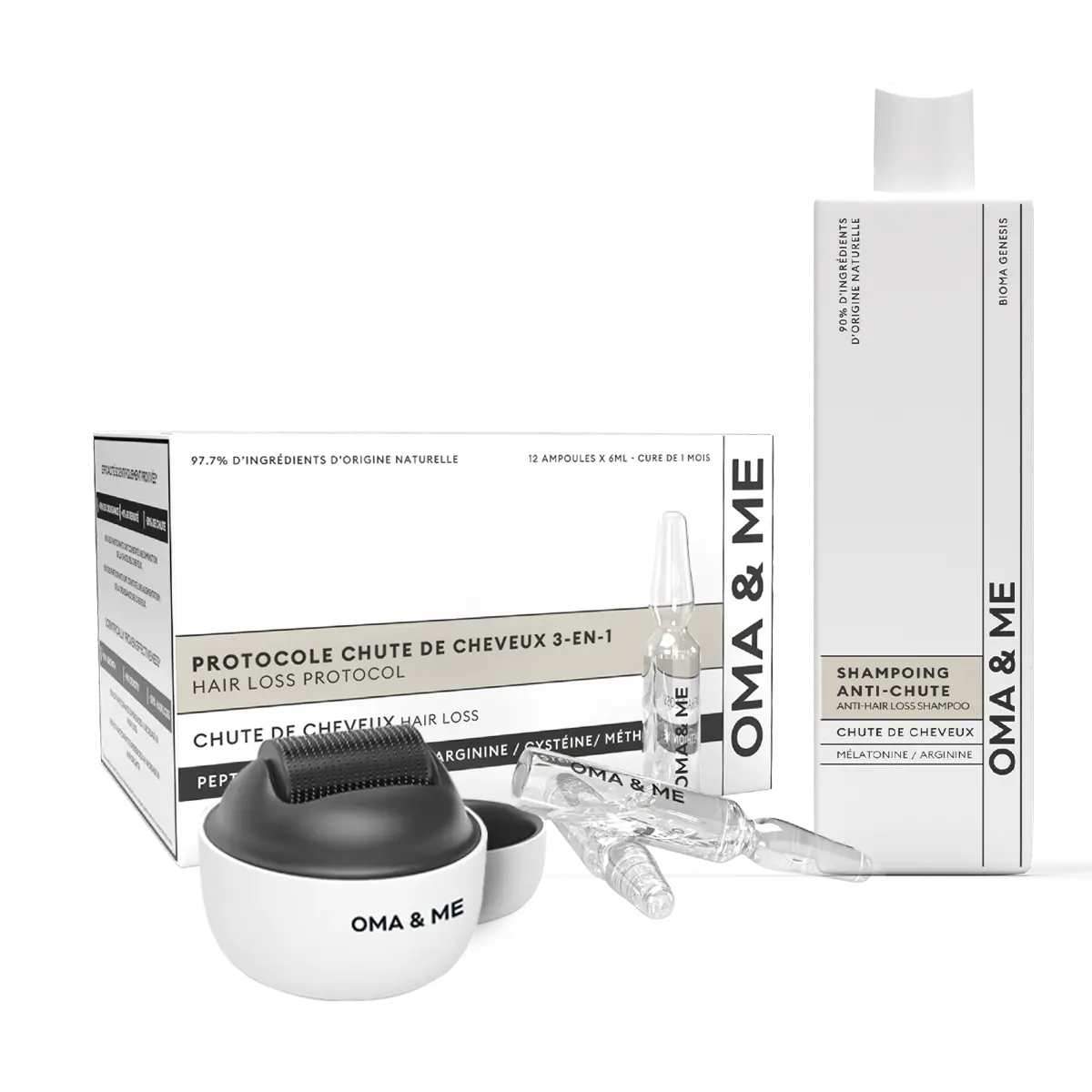
While waiting for PP405 to reach the market, you can opt for the OMA & ME 3-in-1 Hair Loss Protocol — a non-pharmaceutical, scientifically supported approach combining pre- and post-biotics, melatonin, amino acids, and botanical extracts. Recommended use: 3 applications per week for 3 months, ideally with a derma roller.

Important: if hair loss is rapid, extensive, or unusual, consult a dermatologist to verify the cause before starting any treatment.
-
Example product title
Regular price €19,99Sale price €19,99 Regular priceUnit price per -
Example product title
Regular price €19,99Sale price €19,99 Regular priceUnit price per -
Example product title
Regular price €19,99Sale price €19,99 Regular priceUnit price per


