
Stevia for Hair Loss: A Natural Ingredient With Real Scalp Benefits?
FEATURE – Best known as a natural sweetener, stevia could also emerge as an unexpected ally in the fight against hair loss. Recent research is exploring its antioxidant and anti-inflammatory properties, suggesting it could enhance the effectiveness of existing hair treatments.

Table of Contents
1. What is stevia?
2. Why look at stevia for hair?
3. Possible mechanisms of action on the scalp
4. What the scientific studies show
5. How stevia could enhance anti-hair loss treatments
6. Limitations and precautions
7. Key takeaways
8. An alternative available today
9. Scientific sources
1. What is stevia?
Stevia (Stevia rebaudiana) is a plant native to South America, known for its steviol glycosides — compounds with an exceptionally high natural sweetening power. But beyond its role as a sweetener, stevia is increasingly studied for its biological properties: antioxidant, anti-inflammatory, and antimicrobial. These effects make it a promising candidate for skin and scalp health, where chronic inflammation and oxidative stress play a key role in hair loss.
2. Why look at stevia for hair?
The scalp faces multiple stressors: pollution, oxidised sebum, free radicals, repeated micro-inflammations. These factors impair follicle function and accelerate hair miniaturisation. Stevia, through its antioxidant molecules (notably steviol and rebaudioside A), could reduce localised inflammation and create a more favourable environment for hair regrowth. In vitro studies have shown it helps skin cells maintain their metabolic activity under oxidative stress.
3. Possible mechanisms of action on the scalp
- Neutralising free radicals: stevia reduces cellular oxidation that weakens follicles.
- Soothing effect: it helps calm scalp micro-inflammations, often associated with chronic hair shedding.
- Sebum regulation: some studies suggest it helps rebalance sebum production, improving overall scalp health.
Combined, these effects could improve the scalp's receptivity to existing topical treatments.
4. What the scientific studies show
Several academic studies have confirmed that stevia extracts possess strong antioxidant capacity comparable to vitamin E. A study published in the Journal of Agricultural and Food Chemistry (2012) showed that steviol glycosides reduced inflammation markers in human skin cells. Research by Kim et al. (2020) points to a cell regeneration potential linked to modulation of anti-inflammatory pathways. While no study has yet specifically targeted hair regrowth, these findings support the idea that stevia could reinforce conditions favourable to hair growth.
5. How stevia could enhance anti-hair loss treatments
In hair cosmetics, stevia could act as a biological modulator, complementing actives like melatonin, peptides, or probiotics. It could promote better skin tolerance and limit irritation. Its natural moisturising and film-forming effect could also improve active ingredient penetration into the scalp.
6. Limitations and precautions
No clinical study has directly evaluated stevia's efficacy on human hair regrowth. Available results relate to its action on skin cells and oxidative stress. It should therefore be considered a promising natural adjuvant — not a standalone solution. Topical use is safe, but formulations should be dermatologically tested before prolonged application.
7. Key takeaways
- Stevia is more than a sweetener: it's a bioactive plant with demonstrated antioxidant and soothing effects.
- It could improve the tolerability and efficacy of anti-hair loss protocols through synergistic scalp action.
- Studies remain preliminary, but the leads are promising for next-generation hair care.
8. An alternative available today
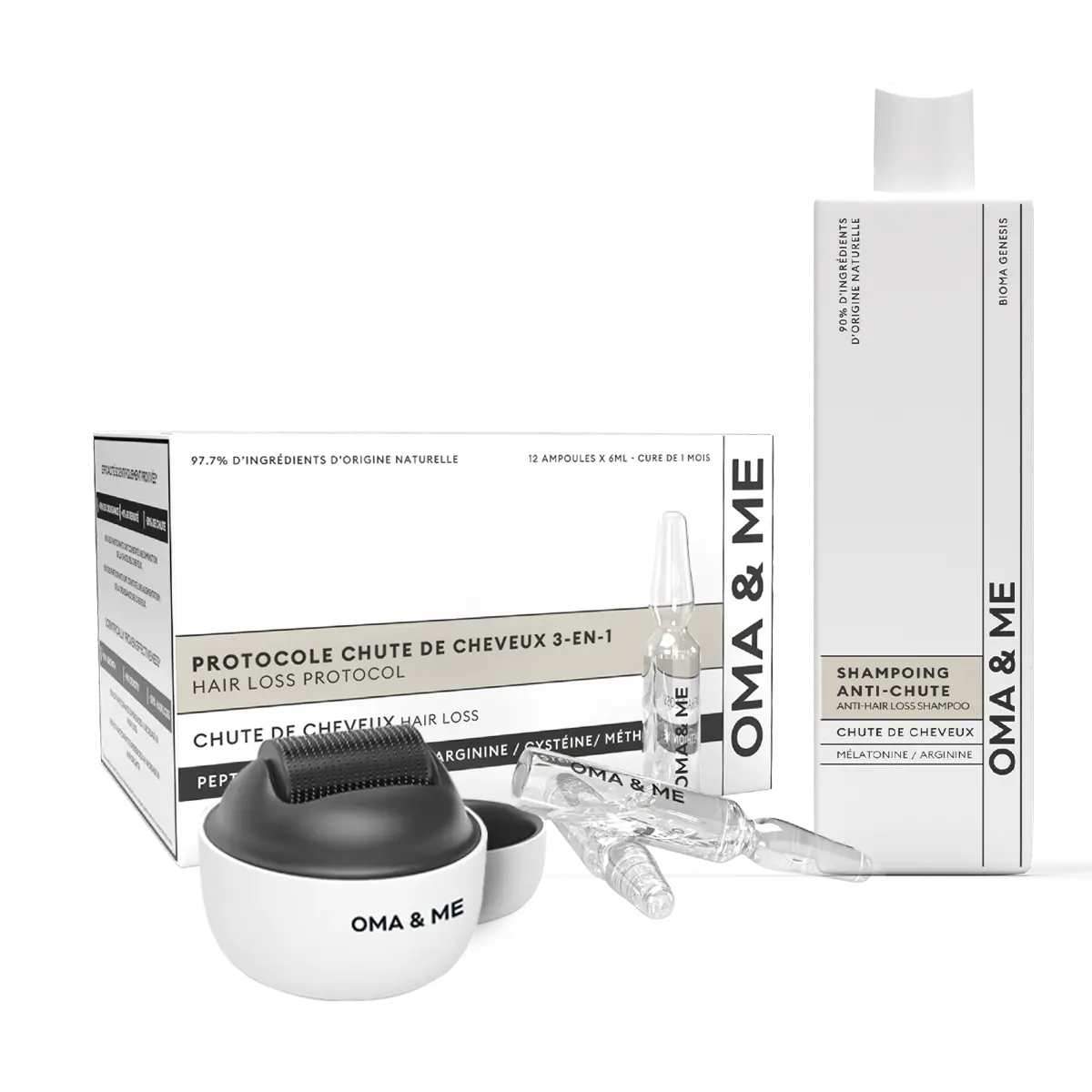
While we await more clinical evidence on stevia, you can opt for the OMA & ME 3-in-1 Hair Loss Protocol — a non-pharmaceutical, scientifically supported solution combining pre- and post-biotics, melatonin, amino acids, and botanical extracts. Recommended use: 3 applications per week for 3 months, ideally with a derma roller.

Important: if hair loss is abnormal or sudden, consult a dermatologist to identify the cause before starting any new treatment.
9. Scientific sources
- Kim, Y. et al. (2020). "Anti-inflammatory and antioxidative effects of Stevia rebaudiana extracts in human skin cells." International Journal of Molecular Sciences.
- Yoshida, Y. et al. (2012). "Antioxidant capacity and protective effects of steviol glycosides against oxidative stress." Journal of Agricultural and Food Chemistry.
- Chatterjee, S. et al. (2019). "Phytochemical and pharmacological properties of Stevia rebaudiana." Frontiers in Pharmacology.
- EFSA Panel (2021). "Safety of steviol glycosides for human use."
-
Example product title
Regular price €19,99Sale price €19,99 Regular priceUnit price per -
Example product title
Regular price €19,99Sale price €19,99 Regular priceUnit price per -
Example product title
Regular price €19,99Sale price €19,99 Regular priceUnit price per


